Guide
How to Clean Your Scalp Tools
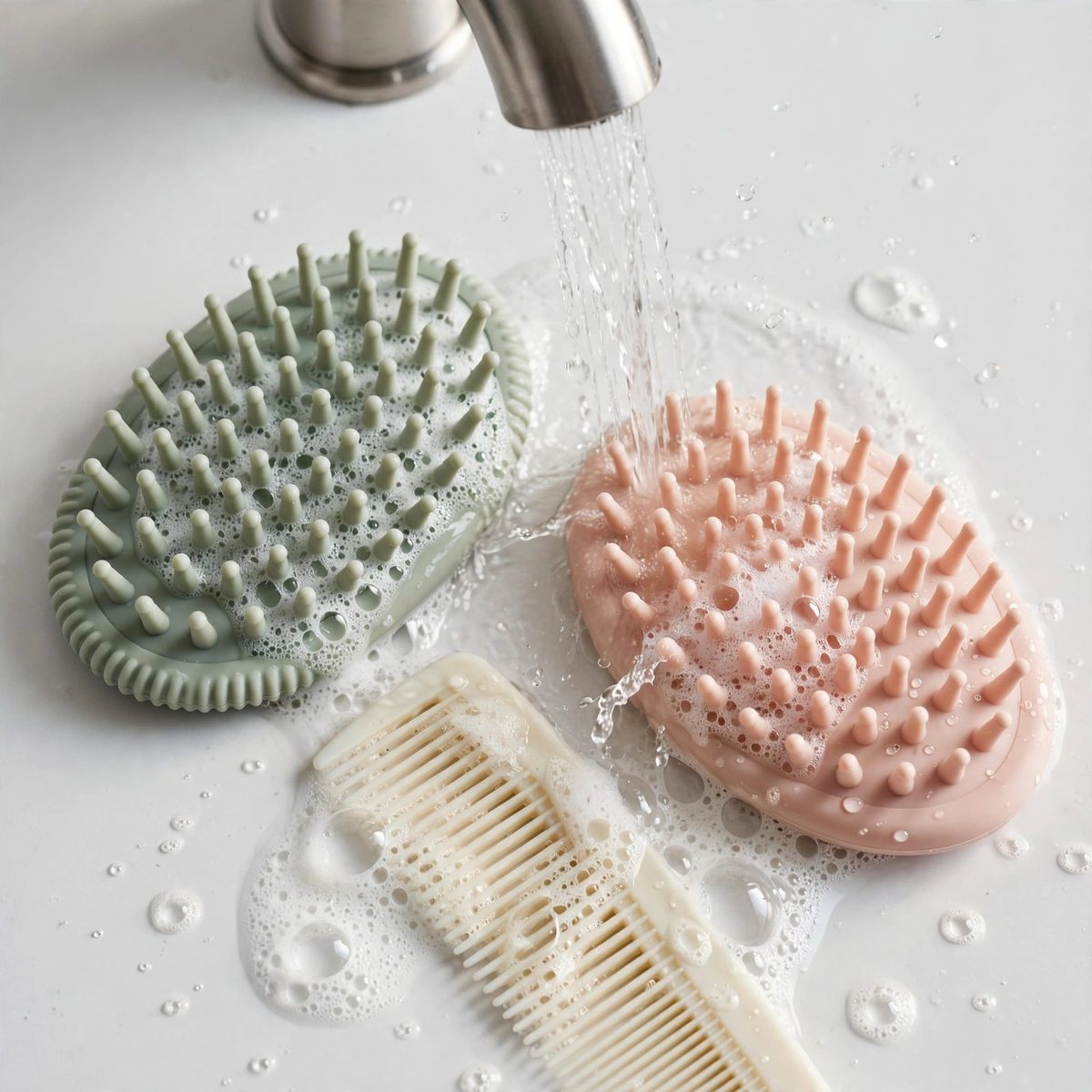
How to Clean Your Scalp Tools
Scalp tools collect more residue than they appear to — shampoo film, styling product, natural oils, and lint all build up on bristles, in crevices, and inside applicator tips. A dirty tool performs worse, can transfer residue back onto clean hair, and wears out faster. The good news: most scalp tools take under five minutes to clean. This guide covers what each tool type needs and how often.
The Golden Rule: Rinse After Every Use
Whatever the tool, a quick rinse under warm water right after use prevents most buildup. Shake off excess water and let the tool air dry completely before storing it — trapped moisture is what leads to musty smells and, on some materials, degradation. This one habit does more for tool longevity than any deep-cleaning session.
Cleaning by Tool Type
Silicone massagers and scrubbers
Silicone is the easiest material to keep clean: it's non-porous and stands up to soap and water. After rinsing, work a drop of mild dish soap or shampoo into the bristles with your fingers, rinse thoroughly, and air dry. For a deeper clean once a month, soak for ten minutes in warm water with a teaspoon of baking soda, then rinse. Tools like the Rootwise Silicone Scalp Massager and the Rootwise Silicone Scrubber Pad are built for exactly this kind of washing.
Brushes with handles and straps
Shampoo brushes and exfoliating brushes often have a handle, strap, or textured grip where residue hides. Scrub the bristle side with soapy water and an old toothbrush to reach between nubs, then wipe the handle and strap with a damp cloth. Don't submerge tools with glued parts for long — a quick wash and thorough rinse is safer than a long soak. The Crownwell Scalp Exfoliating Brush benefits from this toothbrush trick between its firm nubs.
Electric and vibrating massagers
Electronics need a gentler approach. Check whether your model is waterproof or merely water-resistant — waterproof models can be rinsed, while water-resistant ones should only be wiped with a damp cloth. Remove any detachable heads and wash those separately in soapy water. Never submerge a charging base, and make sure everything is fully dry before the next charge. Consult your product's instructions for its specific water rating.
Wooden and bamboo tools
Wood and bamboo don't like being soaked: prolonged water exposure can crack or warp them. Wipe wooden tools like the Rootwise Acupressure Scalp Massager and bamboo combs like the Crownwell Bamboo Scalp Comb with a damp cloth and a little soap, then dry immediately with a towel. Let them finish air drying away from direct heat. A drop of mineral oil rubbed into bamboo occasionally keeps it from drying out — check your product's care notes first.
Applicator bottles and droppers
Applicator tips clog when residue dries inside them. Rinse the bottle, cap, and tip with warm water after each refill, and run a thin wire or pipe cleaner through the nozzle if flow slows. Glass dropper bottles disassemble for easy washing — separate the pipette, bulb, and bottle, wash in warm soapy water, and rinse well. Let every part dry completely before reassembling, since trapped water dilutes your next mixture. See the full range in our Scalp Applicators & Dispensers collection.
Towels, wraps, and fabric accessories
Machine wash hair towels on a gentle cycle with mild detergent and skip the fabric softener, which coats fibers and reduces absorbency — especially on microfiber. Hang dry or tumble on low heat. Wash satin bonnets and sleep caps in a laundry bag to protect the fabric and elastic. Silk-look pillowcases fare well with gentle cycles and mild detergent; air drying extends their smooth finish.
Storage: Where Clean Tools Stay Clean
How you store tools matters almost as much as how you wash them. Keep shower tools in a caddy or on a hook where air circulates — a sealed shower corner that never dries out will undo your cleaning efforts. Store dry-use tools like acupressure massagers and combs in a drawer or pouch away from dust. Applicator bottles stand upright with caps on, in a cool spot out of direct sun. Fabric accessories fold into a drawer or hang on hooks; avoid stuffing damp bonnets or towels into closed bags, where trapped moisture invites odor. A little airflow is the simplest tool-care product there is.
How Often to Deep Clean
- Daily rinse: every tool, after every use — thirty seconds under warm water.
- Weekly wash: soap-and-water wash for silicone, plastic, and fabric tools you use regularly.
- Monthly deep clean: baking-soda soak for silicone tools; nozzle clearing for applicators; laundry for fabric accessories.
- As needed: wipe down electric tools and wooden tools whenever they look or feel grimy.
When to Replace Instead of Clean
Cleaning has limits. Retire a tool when silicone bristles tear or splay for good, when elastic bands lose their stretch, when wood cracks, or when a bottle's nozzle stays clogged after clearing. A worn tool is harder to clean and less comfortable to use — replacement is the better investment. Find fresh tools across our Scalp Massagers & Brushes and Scalp Care Tool Kits collections.