Guide
Choosing a Scalp Brush or Massager
Choosing a Scalp Brush or Massager
A scalp brush or massager is one of the simplest tools you can add to your hair routine. These handheld tools use bristles, nubs, or nodes to work across the scalp, helping you massage during shampooing, lift away loose buildup, or simply enjoy a few quiet minutes of self-care. With so many shapes, bristle types, and price points on the shelf, picking one can feel harder than it should be. This guide walks through the main types, what each one does, and how to match a tool to your hair and routine.
The Main Types of Scalp Tools
Most scalp brushes and massagers fall into four broad families. Understanding what each one is built to do makes the choice much easier.
Manual silicone massagers
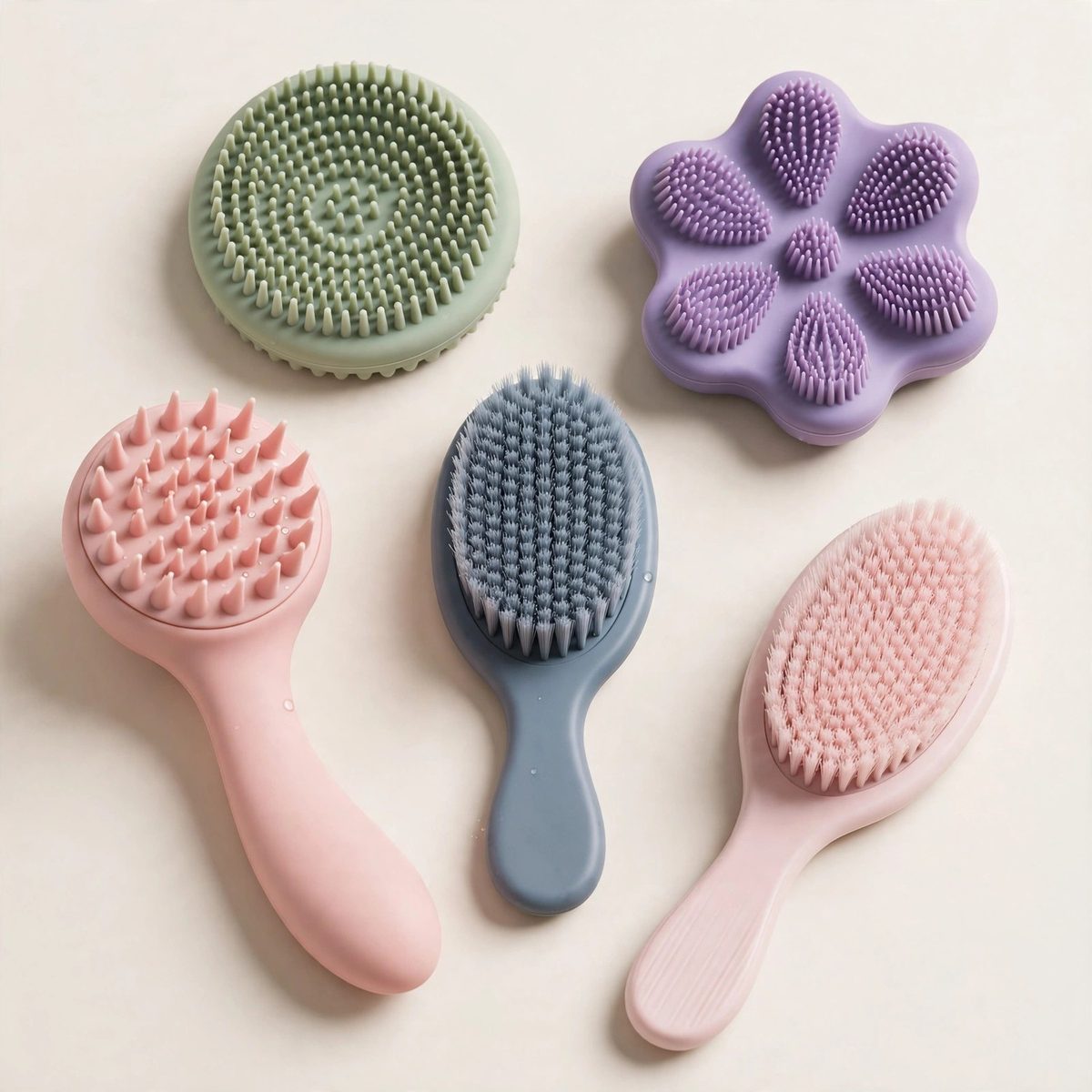
A manual silicone massager is the workhorse of the category: a palm-sized tool covered in soft, flexible bristles that you move in small circles across the scalp. Use it on wet hair with shampoo to help work lather through the roots, or on dry hair between washes for a gentle massage. They need no batteries, rinse clean in seconds, and travel well. The Rootwise Silicone Scalp Massager is a typical example — soft bristles, one-piece construction, and nothing to charge.
Shampoo brushes
Shampoo brushes look similar to massagers but are designed with shampooing in mind: slightly firmer bristles and an ergonomic handle or strap that gives you grip on soapy hair. They're made to be used in the shower, helping distribute shampoo evenly from hairline to crown. Many come in multi-packs so you can keep one at home and one in a gym bag, like the Crownwell Shampoo Scalp Brush, 2 Pack.
Electric and vibrating massagers
Electric massagers add motion — rotating nodes or vibration — so the tool does more of the work. They're a good fit if your hands tire easily or you want a longer massage without extra effort. Look for a comfortable grip, a simple on/off control, and a waterproof rating if you plan to use it in the shower. The Scalpia Electric Scalp Massager and the Scalpia Vibrating Scalp Brush both sit in this category, with different node styles and intensity settings.
Acupressure-style massagers
These tools use rounded prongs on a curved handle to press against the scalp rather than brush across it. They don't lather or exfoliate — they're purely massage tools, and many people find the pressure points satisfying after a long day. The Rootwise Acupressure Scalp Massager is a wooden example with a shape designed to follow the curve of the head.
What to Consider Before You Buy
Bristle firmness
Bristle firmness is the single biggest comfort factor. Softer silicone bristles suit sensitive scalps and fine hair, while firmer nubs give a more invigorating feel and help lift styling-product residue. If you're unsure, start with medium-soft — it's the easiest to live with daily.
Hair length and texture
Long or thick hair benefits from longer bristles that can reach the scalp through the hair, plus a handle or strap that keeps the tool in your grip when hair is soapy. Short hair works fine with almost any design. For curly or coily textures, a tool with flexible, widely spaced bristles is less likely to snag than a dense, rigid one.
Wet vs. dry use
Decide where the tool will live in your routine. Shampoo brushes and waterproof electric massagers are shower tools. Manual silicone massagers and acupressure tools work dry too, so they're more versatile. If you want one tool for everything, a manual silicone massager is usually the most flexible pick.
Grip and ergonomics
A tool you can't hold comfortably is a tool you won't use. Strap handles keep palm-shaped massagers secure on wet hands; contoured grips suit longer massage sessions. If you have limited hand strength, lean toward electric models and lighter tools.
How to Use Your New Tool
Start on wet hair with shampoo for the most forgiving first experience — the lather lets the bristles glide. Divide the scalp into sections (front, sides, crown, back) and spend 20–30 seconds on each, using small circular motions and light pressure. There's no need to press hard; the bristles are designed to do the work. Rinse the tool after every use, shake off excess water, and store it somewhere it can air dry.
For dry-hair massage, use even less pressure and keep sessions short — five minutes is plenty. Stop if anything feels uncomfortable; mild tools should feel pleasant, not irritating.
Care and Replacement
Wash silicone and plastic tools weekly with warm water and mild soap, and let them dry fully to avoid trapped moisture. Wooden tools should be wiped down rather than soaked. Replace a tool when bristles start to splay, tear, or lose their shape — a worn tool is less comfortable and less effective. Browse the full range in our Scalp Massagers & Brushes collection, or pair your brush with exfoliating tools from the Scalp Exfoliating Tools collection for a fuller routine.