Guide
Finding the Right Bonnet Fit
Finding the Right Bonnet Fit
A satin bonnet only does its job if it stays on all night. Too loose and it slides off by midnight; too tight and it leaves marks, causes headaches, or pops off when you turn over. Fit depends on three things: size, closure style, and how you put it on. This guide walks through each one so your bonnet actually makes it to morning.
Why Fit Matters
Bonnets protect hair overnight by covering it in a smooth, low-friction fabric that reduces tangling and helps hairstyles last. But that only works while the bonnet is on your head. A bonnet that migrates during the night protects nothing, and one that's uncomfortably tight can disrupt the very sleep it's meant to support. Getting the fit right is the difference between a bonnet you wear every night and one that lives in a drawer.
Step 1: Measure for Size
Bonnets generally come in a few size bands, and your hair volume — not just head circumference — determines which one you need. Measure around your head at the hairline with a soft tape, then consider how much hair needs to fit inside: short hair or a low style needs the least room, while long, thick, or high-volume hair needs the largest size available.
- Short to medium hair: a standard or medium bonnet is usually enough.
- Long or thick hair: size up — extra room keeps the bonnet from riding up as hair shifts inside.
- Very long hair or protective styles: look for jumbo or extra-large sizes designed for maximum volume.
When in doubt between two sizes, choose the larger one. A slightly roomy bonnet stays on better than a stretched-to-the-limit one. Also consider the fabric weight: double-layer satin bonnets feel more substantial and tend to grip a little better than single-layer ones, though they can feel warmer. Single-layer bonnets are lighter and cooler but rely more on the closure for security. If you sleep hot, lean single-layer; if your bonnet keeps slipping, try double-layer.
Step 2: Choose a Closure Style
Elastic band
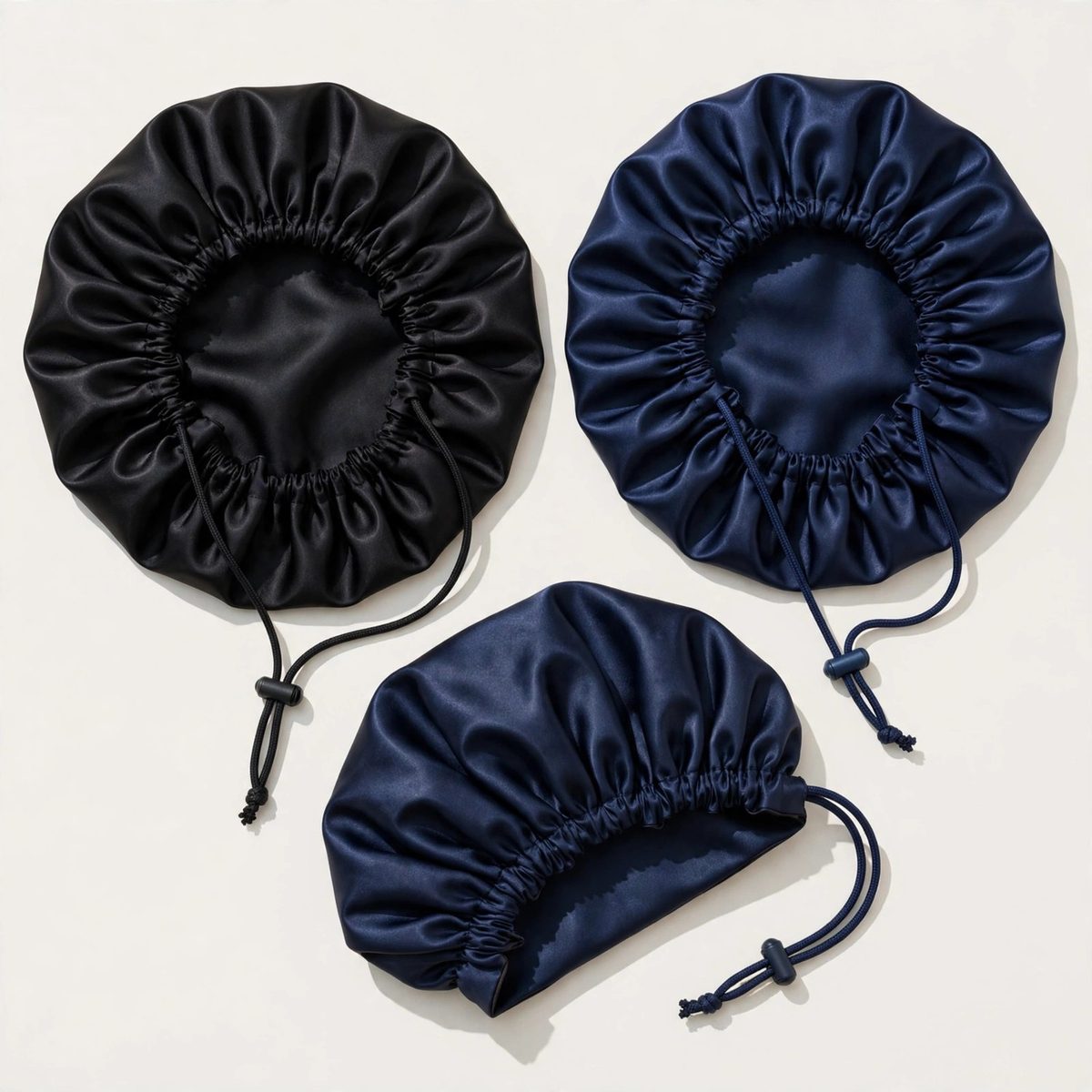
Elastic-band bonnets are the simplest: a wide band grips around the hairline. Look for a band that's wide (narrow bands dig in) and soft rather than rigid. The Scalpia Satin Hair Bonnet pairs an elastic band with a drawstring, giving you two levels of adjustability.
Drawstring or tie
Drawstring bonnets let you dial in the fit precisely — tighten for security, loosen for comfort. They're a good choice if your head size falls between standard elastic sizes, or if you like to adjust through the night. The toggle on the Rootwise Adjustable Satin Sleep Cap locks the drawstring at whatever tension you choose.
Combination closures
Some bonnets use both elastic and a drawstring. The elastic provides baseline grip while the drawstring fine-tunes it — this combination tends to stay put most reliably for active sleepers. If you've lost bonnets to tossing and turning before, a combination closure is worth trying.
Step 3: Put It On Correctly
- Gather your hair. Tuck hair loosely inside — a loose high gathered ponytail or low bun keeps it contained without tension.
- Tilt forward. Bend at the waist so hair falls into the bonnet's opening, then pull the bonnet down over everything.
- Seat the band. Position the band around your hairline — not on your forehead, not halfway up your head. It should sit flat all the way around.
- Adjust the closure. Tighten the drawstring or smooth the elastic until the bonnet feels secure but not tight. You should be able to slide one finger under the band comfortably.
- Check the back. The nape is the most common escape route — make sure the band sits low enough at the back to cover it.
Troubleshooting Common Fit Problems
- Slides off at night: size down the band tension or switch to a drawstring style; make sure hair is fully tucked in rather than piled at the top.
- Leaves marks on the forehead: the band is too tight — loosen it or size up.
- Rides up at the back: the bonnet is too small for your hair volume; size up or choose a deeper style.
- Feels hot: try a lighter satin or a silk-look fabric with better breathability, and avoid layering the bonnet over a second cap.
Care and When to Replace
Hand wash or machine wash your bonnet in a laundry bag on a gentle cycle, and air dry to protect the elastic. A laundry bag is worth the small effort — it keeps the drawstring from tangling with other laundry and protects the satin surface from snagging on zippers and hooks. Replace it when the band loses its stretch, the fabric thins, or the drawstring stops holding — a stretched-out bonnet is a bonnet that won't stay on. Explore the full range in our Silk & Satin Hair Accessories collection, including the Scalpia Silk-Look Head Scarf as a daytime alternative.