Article
How to Massage Your Scalp: Techniques and Tools
How to Massage Your Scalp: Techniques and Tools
Scalp massage is one of the oldest self-care practices in the book, and also one of the simplest: your own hands, a few minutes, and optionally a tool to help. People fold it into shampooing, use it as a wind-down ritual before bed, or treat it as a quiet pause in a busy day. This guide covers the basic techniques, the tools that make them easier, and how to build a scalp-massage habit that fits your routine — described in plain, practical terms, with no inflated promises.
Why People Massage Their Scalps
The appeal is straightforward: it feels good. Rhythmic pressure across the scalp is relaxing in the same way a shoulder rub is relaxing — it gives you a few minutes of focused, physical self-care. Many people find it helps them unwind before sleep, break up the tension of a long day at a desk, or simply enjoy their shower more. Some use it as part of shampooing to work lather through the roots; others do it dry as a standalone ritual. There's no single "right" reason — the technique is the same either way, and the benefit most people report is simple comfort and relaxation.
Basic Hand Techniques
You don't need any equipment to start. These four techniques form the foundation of most scalp-massage routines.
Fingertip circles
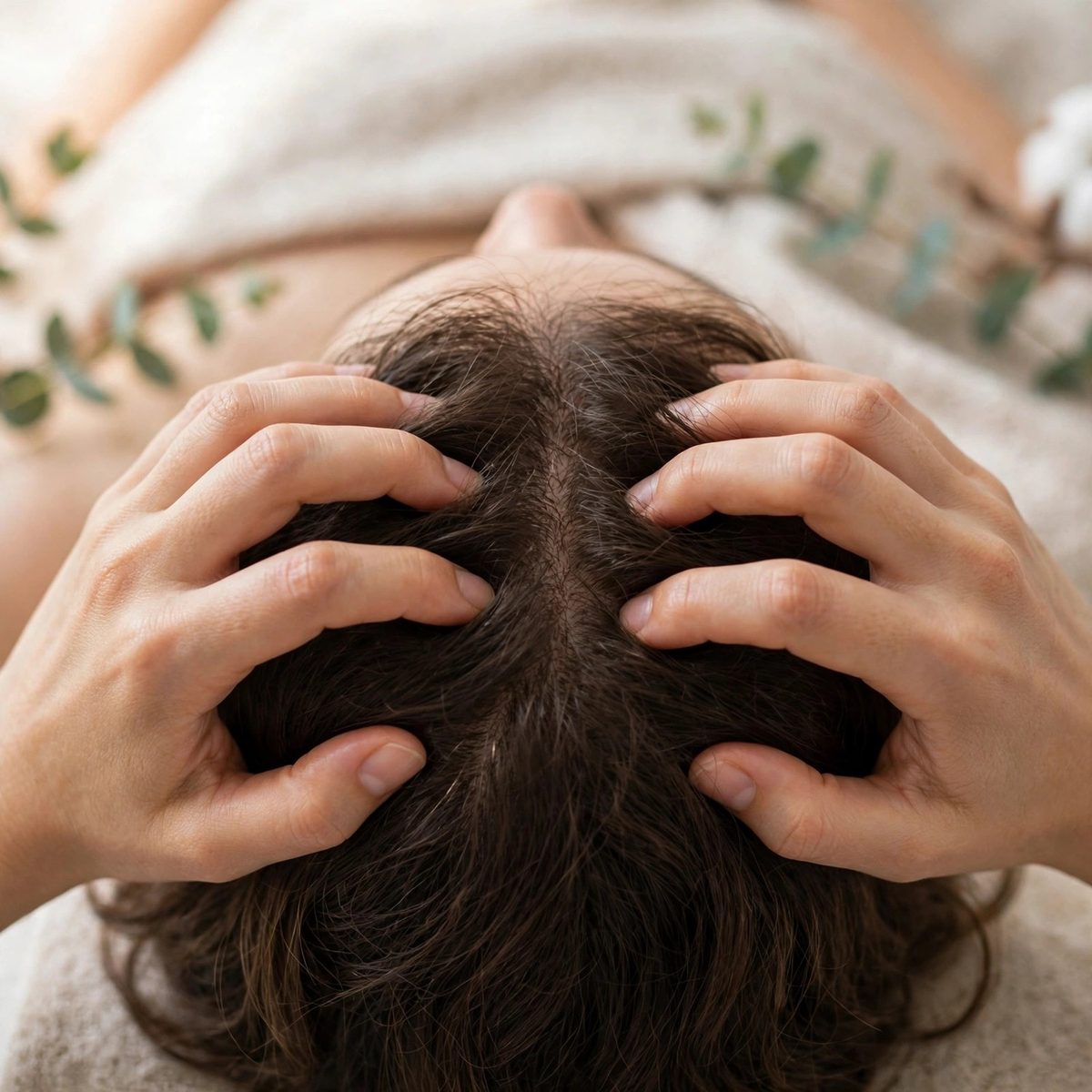
Place your fingertips (not nails) firmly on the scalp and move the skin in small circles. Work in sections: start at the front hairline, move across the crown, then down the sides and back. Spend 20–30 seconds per section. The motion should move the scalp itself, not just slide across the hair — if your fingers are gliding, press a little more firmly.
Kneading
Using the pads of your fingers or your palms, gently knead the scalp as though you were kneading dough — lift, press, and release. This broader motion suits the larger areas of the crown and the back of the head, and many people find it the most relaxing of the basic techniques.
Tapping
Light, rhythmic tapping with the fingertips across the whole scalp wakes things up and feels invigorating, especially in the morning. Keep it gentle — think raindrops, not drumming. A minute of tapping is plenty.
Pressure holds
Press the palms or fingertips into the scalp at a few key spots — the temples, the base of the skull, the crown — and hold steady pressure for 5–10 seconds before releasing. This static pressure suits people who find circular motions irritating or who want a calmer, more meditative session.
How Long and How Often
Five minutes is a good session length — long enough to feel thorough, short enough to do daily. Some people prefer a quick two-minute massage in the shower every wash day; others set aside ten unhurried minutes in the evening. Consistency matters more than duration: a short daily massage becomes a habit, while an ambitious weekly one often doesn't. Start with every other day and adjust based on how your scalp feels and how much time you actually have.
Tools That Make It Easier
Hands work fine, but tools add reach, consistency, and comfort — especially for longer sessions or when your hands tire.
Manual silicone massagers
A palm-sized silicone massager with soft bristles lets you cover the scalp quickly with even pressure. They're particularly good in the shower, where they help work shampoo through the roots while massaging. The Rootwise Silicone Scalp Massager is a straightforward example — soft flexible bristles, no batteries, rinses clean. Pair one with a shampoo brush from the Crownwell Shampoo Scalp Brush, 2 Pack if you want a firmer shower option alongside it.
Electric massagers
Electric models add rotating nodes or vibration so the tool supplies the motion. They're worth considering if you want longer sessions without hand fatigue, or if you simply enjoy a more intensive feel. The Scalpia Electric Scalp Massager uses rotating nodes, while the Scalpia Vibrating Scalp Brush uses vibration in a compact oval form. Check the water rating before using any electric tool in the shower.
Acupressure-style tools
For pure pressure rather than circular motion, an acupressure-style tool with rounded prongs — like the Rootwise Acupressure Scalp Massager — lets you press and hold across the scalp with minimal effort. The curved wooden handle follows the shape of the head, which makes longer sessions comfortable.
Browse the full selection in our Scalp Massagers & Brushes collection to weigh styles side by side.
Wet vs. Dry Massage
Wet massage — during shampooing — is the most common approach. Lather provides glide, the warm water is relaxing, and you're already there. Use small circles with your tool or fingertips, working shampoo from the hairline back, and rinse the tool when you rinse your hair.
Dry massage suits non-wash days. Use lighter pressure and shorter sessions, since there's no lather to reduce friction. It's a good fit for the evening wind-down, and tools with smooth, rounded contact points are the most comfortable on dry hair. If your hair tangles easily, detangle first — massaging through tangles is uncomfortable and counterproductive.
Massage for Different Moments of the Day
The same basic techniques feel different depending on when you use them, and matching the style to the moment makes the habit stick. In the morning, keep it brisk and invigorating: a minute of fingertip tapping followed by quick circles with a silicone massager while you shampoo. The goal is to wake up, not wind down. Midday — especially after hours at a desk — a two-minute pressure-hold session at the temples and the base of the skull can break up the stiffness of sustained posture; you don't even need to leave your chair. In the evening, slow everything down: dim the lights, use an acupressure-style tool or your fingertips, and stretch the session to ten minutes with slow kneading. The slower pace signals to your body that the day is ending, which is why so many people fold evening massage into their pre-sleep routine.
Building the Habit
A scalp-massage routine you'll actually keep is one anchored to something you already do each day: massage while your conditioner sits, during the last two minutes of your shower, or as part of getting ready for bed. Keep your tool where you'll see it — in the shower caddy, on the nightstand — because out of sight means out of routine. After a week or two of consistent sessions, it stops feeling like a task and starts feeling like a small daily comfort, which is exactly what it's meant to be. If you miss a day, just pick it up the next one; the habit survives occasional gaps far better than it survives guilt about them.
A Note on Expectations
Scalp massage is a comfort and self-care practice. We describe our tools by what they do mechanically — they massage, they help distribute shampoo, they feel pleasant to use. We don't claim they treat medical conditions, regrow hair, or cure dandruff, and you should be skeptical of any tool that promises those things. If you have a scalp condition that concerns you, a dermatologist is the right person to ask — not a product page.