Article
How to Dry Hair Gently with a Hair Towel
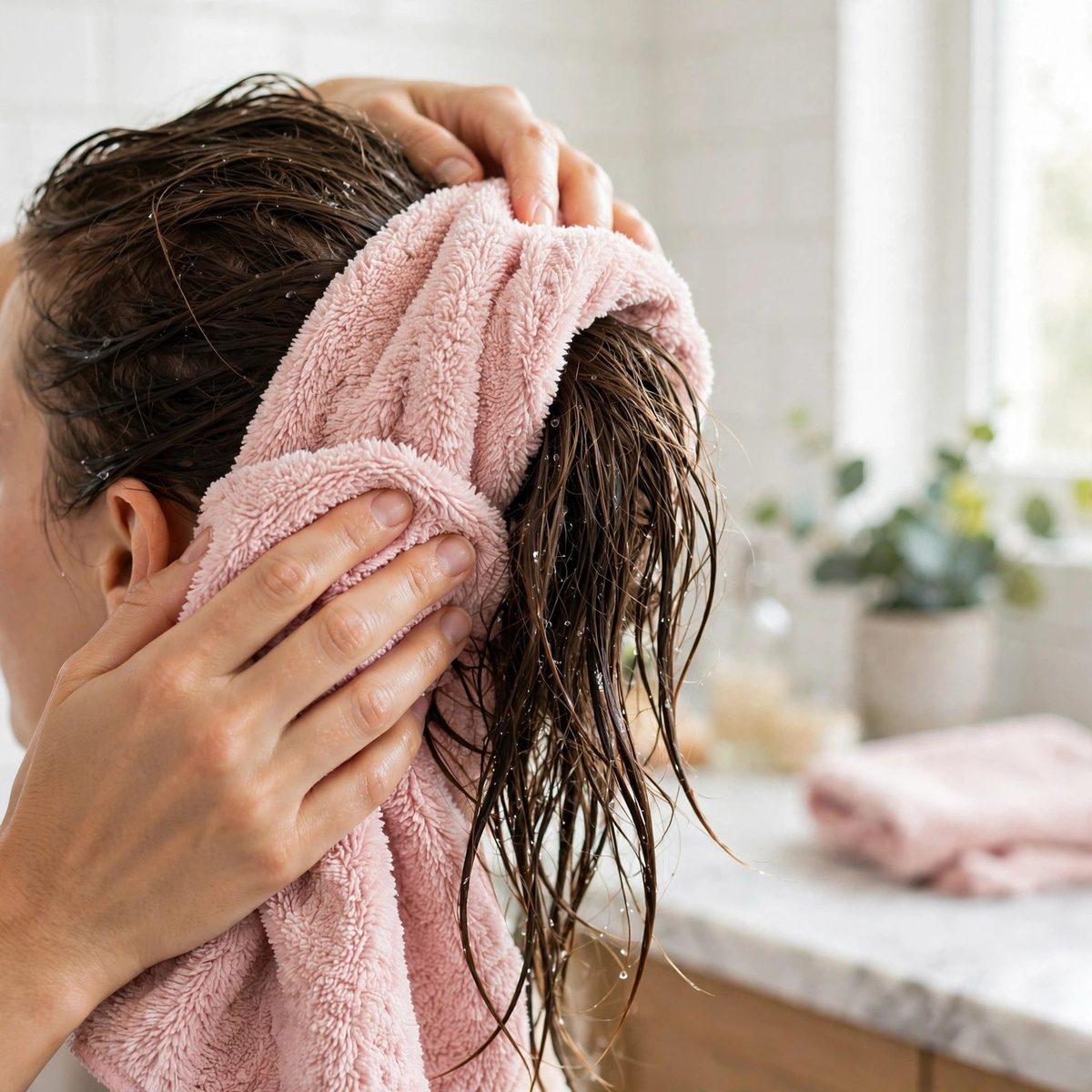
How to Dry Hair Gently with a Hair Towel
Hair is at its most vulnerable when wet — it stretches more easily, snags more readily, and breaks under forces that dry hair would shrug off. How you dry it matters as much as how you wash it, and the humble hair towel is where most routines go wrong. Vigorous rubbing with a coarse bath towel is one of the most common sources of everyday frizz and breakage. This guide covers how to dry hair gently, which towel to reach for, and the techniques that keep hair calmer from shower to style.
Why Wet Hair Needs Gentle Handling
When hair absorbs water, the strands swell and the outer cuticle layer lifts slightly. In this state, hair is more elastic — it can stretch up to about 30% further than when dry — but that stretch comes with fragility. Rough handling creates friction that roughs up the cuticle, leading to frizz, tangles, and over time, breakage at the points of greatest stress. Gentle drying is about removing water with minimal mechanical disturbance: press and absorb rather than rub and wrench.
Choosing the Right Towel
A dedicated hair towel beats a bath towel on every axis that matters: lighter weight (less pulling at the roots), smoother fabric (less friction), and faster absorption relative to size. The main fabric options each have their strengths:
- Microfiber: the fastest absorber for its weight, and the lightest on the head. Ideal for thick or long hair that holds a lot of water. The Crownwell Microfiber Hair Towel Wrap adds a button closure and tapered shape so it stays put.
- Bamboo: plush and soft with good absorbency — a comfortable choice if microfiber feels too synthetic. The Rootwise Bamboo Hair Towel has a soft waffle texture.
- Waffle weave: lightweight, breathable, and quick to dry between uses. The Scalpia Waffle-Weave Hair Towel packs small and hangs from its loop.
- Turban styles: twist-and-loop wraps stay secure hands-free while you get ready. The Scalpia Quick-Dry Hair Turban, 2 Pack gives you one in use and one in the wash.
For a full comparison of fabrics, see our guide to Hair Towels & Wraps.
The Gentle Drying Method, Step by Step
- Squeeze, don't wring. Before reaching for the towel, gently squeeze sections of hair with your hands to press out loose water. Never wring hair like a washcloth — twisting is the fastest route to tangles and breakage.
- Blot in sections. Working from roots to ends, press the towel against sections of hair and hold for a few seconds to let the fabric absorb. Lift and move to the next section rather than dragging the towel along the hair.
- Wrap for the first ten minutes. The most effective drying happens passively: wrap hair in the towel and let it absorb while you get on with your routine. Ten to fifteen minutes removes a large share of the water with zero friction.
- Unwrap and assess. Hair should be damp, not dripping. If it's still very wet, re-wrap with the dry side of the towel or a fresh one rather than rubbing.
- Detangle only when damp, not soaked. Use a wide-tooth comb or your fingers, starting from the ends and working up. Detangling sopping-wet hair causes more breakage than detangling damp hair.
- Let air do the rest. Whenever time allows, let hair finish air drying. The towel's job is to remove the bulk of the water; air is the gentlest finisher there is.
Techniques by Hair Type
Straight and fine hair
Fine hair shows friction damage fastest, so keep everything light: blot gently, wrap loosely, and avoid heavy towels that pull at the roots. Microfiber or waffle weave in a turban style works well — minimal weight, maximal absorption.
Wavy and curly hair
Curly hair benefits from "plopping": after blotting, lay the towel flat, flip your head forward so curls pile onto the towel's center, then wrap it up. This keeps curls compact and defined while the towel absorbs, rather than stretching them out. Smooth microfiber or bamboo used this way preserves curl pattern far better than rubbing.
Thick or long hair
Thick hair holds the most water and takes the longest to dry. Use the most absorbent towel you have — usually microfiber — and don't hesitate to swap to a second dry towel halfway through. Section the hair and blot each section individually before wrapping; one wrap rarely covers everything on very long hair.
Coily hair
Keep manipulation minimal: blot in sections with a smooth fabric, then wrap or band rather than rubbing. Bamboo's softness suits coily textures well, and a satin-lined cap like the Crownwell Satin-Lined Shower Cap can protect styled hair between wash days.
Wash Days vs. Refresh Days
Full wash-day drying and between-wash refreshing are different jobs. On wash days, the towel does the heavy lifting: squeeze, blot, wrap, and let it absorb for ten to fifteen minutes before you touch a comb. On refresh days — when you're reviving second- or third-day hair — the goal is different. You may only need to lightly dampen the roots or smooth specific sections, in which case a barely-damp towel pressed against the hair is enough; a full wrap would undo the style you're trying to preserve. A satin-lined shower cap on non-wash days keeps styled hair dry in the shower so there's less to fix afterward. Matching the drying approach to the day keeps you from over-handling hair that doesn't need a full routine.
Transitioning to Heat Styling
If you blow-dry after towel drying, the towel stage determines how much heat exposure your hair needs. The drier your hair is before the dryer comes out, the less time under heat it requires — and less heat time means less cumulative stress. Aim to get hair to roughly 70–80% dry with the towel and air before picking up the dryer. Use the dryer's lowest effective heat setting, keep it moving, and maintain a few inches of distance rather than parking it on one section. A good towel routine doesn't just protect hair on its own; it shortens every heated step that follows.
What Not to Do
- Don't rub vigorously. The single biggest mistake — it creates frizz and tangles instantly.
- Don't wrap too tightly. A tight twist pulls at the roots and the hairline. Snug is fine; strained is not.
- Don't leave the wrap on for hours. Beyond 20–30 minutes the towel stops absorbing and starts keeping the scalp damp, which isn't comfortable.
- Don't use a rough bath towel. Terry cotton's looped texture is designed for skin, not hair.
- Don't brush wet hair aggressively. If you must brush, use a tool designed for wet hair and work from ends upward.
Towel Care for Lasting Performance
Wash hair towels before first use, then regularly — weekly for daily-use towels. Use mild detergent, skip fabric softener (it coats fibers and reduces absorbency), and hang dry or tumble low. Replace a towel when it stops absorbing well or the fabric thins; a tired towel forces you to rub harder, which defeats the whole gentle-drying approach. With the right towel and a little patience, drying becomes one of the kindest steps in your routine instead of one of the roughest.